
 Skip to content

Running a successful surgical practice requires more than delivering excellent patient care. Behind every surgical procedure is a complex network of medical coding, insurance verification, prior authorizations, claims processing, payer enrollment, reimbursement management, and patient communication.
For surgeons and surgical groups across the United States, managing these responsibilities efficiently is essential to maintaining a financially healthy practice.
A single coding error, missing authorization, incorrect modifier, or provider credentialing issue can result in delayed reimbursement, denied claims, or additional administrative work.
At Nexa Digital Pro, we understand the operational challenges surgical practices face. Our comprehensive solutions combine Surgery Medical Billing Services, Revenue Cycle Management (RCM), Provider Credentialing, Website Development, and Healthcare SEO to help surgical practices strengthen their operations and online presence.
Whether you operate a general surgery practice, orthopedic surgery group, plastic surgery clinic, or another surgical specialty, an integrated approach to revenue cycle operations and digital growth can make a meaningful difference.
Surgical medical billing is more complex than many routine office-based billing services.
Unlike standard evaluation and management visits, surgical procedures frequently involve multiple CPT codes, procedure-specific modifiers, global surgical periods, payer-specific policies, and coordination among several healthcare professionals.
A typical surgical claim may require careful review of:
Even small errors in these areas can lead to rejected claims, payment reductions, or denials.
Professional surgical medical billing services support accurate claim preparation, appropriate coding, timely submissions, and consistent follow-up.
At Nexa Digital Pro, our surgical billing support focuses on helping practices improve billing accuracy, identify avoidable errors, and manage reimbursement workflows more efficiently.
Our goal is to reduce unnecessary administrative burdens so your surgical team can dedicate more time to patient care.
Revenue Cycle Management refers to the financial and administrative processes involved in receiving payment for healthcare services.
For surgical practices, the revenue cycle often begins well before the procedure takes place.
It may start with patient scheduling, insurance eligibility verification, benefit review, and prior authorization.
The process continues through surgical documentation, coding, charge entry, claim submission, payment posting, denial management, and outstanding balance recovery.
Complex procedure coding: Surgical coding requires careful interpretation of operative reports, payer guidelines, and procedure-specific coding rules.
Prior authorization requirements: Certain surgical procedures require payer approval before services are performed. Missing or incorrect authorizations may create reimbursement problems.
Claim denials: Claims may be denied because of documentation deficiencies, coding discrepancies, coverage limitations, or enrollment issues.
Delayed insurance payments: Unresolved claims and inconsistent payer follow-up can affect practice cash flow.
Aging accounts receivable: Outstanding insurance balances can accumulate when unpaid claims are not reviewed and addressed promptly.
Multiple payer contracts: Different insurance companies may have different billing requirements, reimbursement policies, and filing deadlines.
An effective RCM process helps identify these challenges early and creates a structured approach to resolving them.
Accurate medical coding is one of the most important components of surgical reimbursement.
Surgical claims often involve detailed operative reports that must support the services billed.
Coding teams may need to review procedure descriptions, anatomical locations, surgical techniques, medical necessity, and other documentation.
CPT Coding
Current Procedural Terminology codes identify the medical procedures and services performed.
Selecting the appropriate CPT code is essential for communicating the procedure to the insurance payer.
ICD-10-CM Diagnosis Coding
Diagnosis codes help explain the medical conditions supporting the services provided.
Surgical Modifiers
Modifiers may communicate circumstances such as multiple procedures, bilateral services, or specific surgeon roles.
Global Surgical Periods
Certain surgical procedures include related preoperative, intraoperative, and postoperative services within a global surgical package.
Incorrect billing of included services may result in claim denials or overpayments.
Medical Documentation
Operative reports and supporting records must appropriately substantiate the codes submitted.
A well-managed surgical billing workflow helps connect documentation, coding, and payer requirements before claims are transmitted.
Prior authorization is particularly important in many surgical specialties.
Insurance companies may require approval before certain procedures are performed, depending on the patient’s plan, diagnosis, and the service being requested.
An incomplete authorization process can create significant financial and operational challenges.
A structured process may include:
Authorization approval does not guarantee payment. Claims must still meet applicable coverage, documentation, eligibility, and billing requirements.
Nexa Digital Pro supports practices with administrative coordination and follow-up for prior authorization workflows, helping surgical teams stay organized throughout the process.
Claim denials are among the most common obstacles to an efficient medical revenue cycle.
For surgical practices, denials may involve high-value claims, making timely investigation especially important.
An organized denial management program reviews the reason for each denial and determines the appropriate corrective action.
This may involve correcting claim information, submitting additional documentation, appealing eligible denials, or identifying recurring billing problems.
Effective denial analysis also helps practices recognize patterns and improve their front-end processes.
Accounts Receivable (A/R) represents outstanding balances owed to a practice.
A/R is commonly monitored using aging categories:
| A/R aging | Recommended operational focus |
|---|---|
| 0–30 days | Confirm timely claim processing |
| 31–60 days | Investigate pending claims and payer responses |
| 61–90 days | Prioritize unresolved payment issues |
| 91–120 days | Escalate outstanding denials and follow-up |
| 120+ days | Conduct focused recovery and collectibility review |
Not every outstanding balance is recoverable, and appropriate follow-up must consider payer rules, contractual adjustments, and filing deadlines.
At Nexa Digital Pro, our Medical Billing A/R Services and Denial Management Services help practices monitor unpaid claims, investigate payment issues, and support recovery of eligible outstanding revenue.
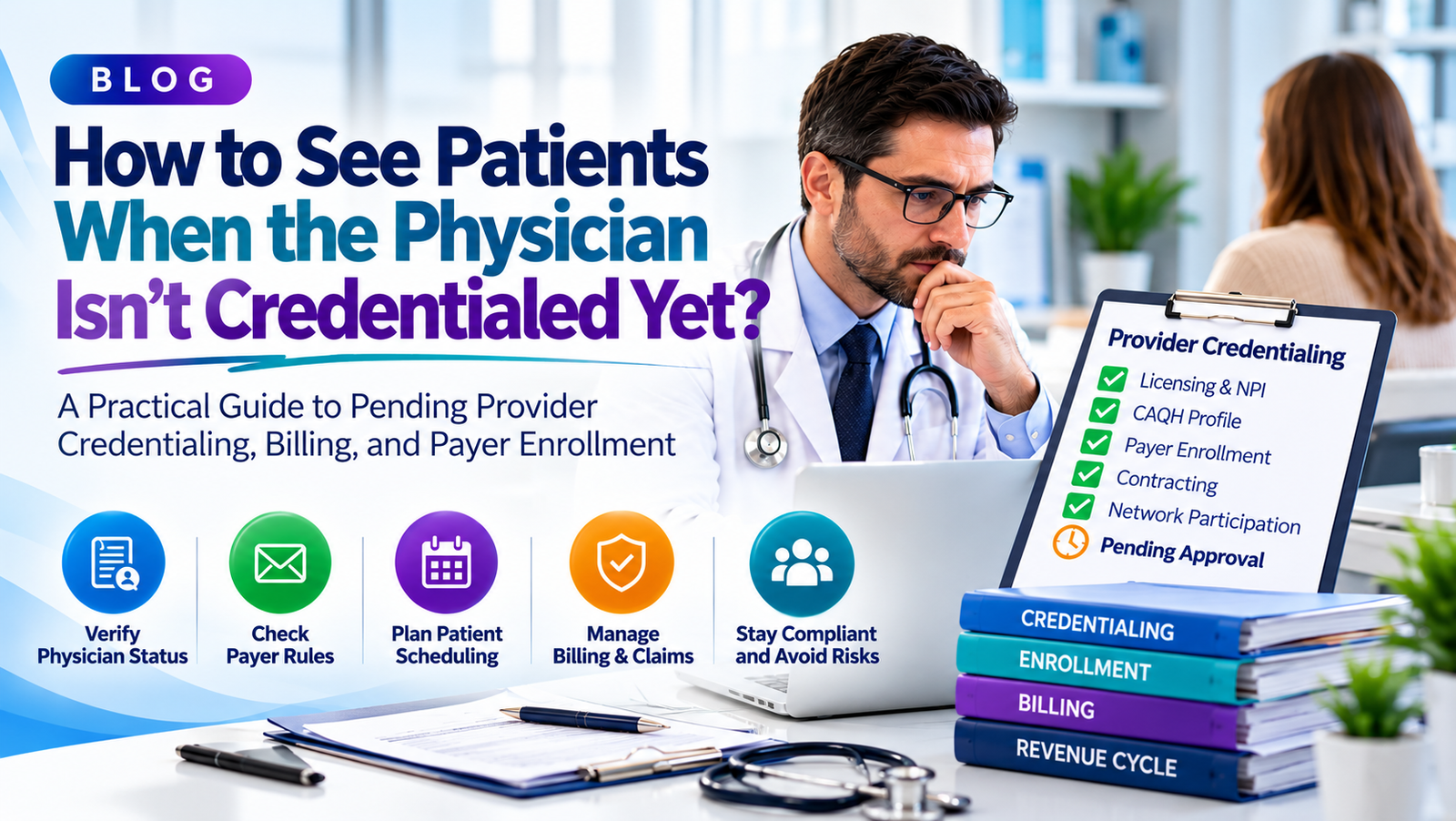
Provider credentialing is another critical component of surgical practice operations.
A surgeon may be fully licensed and qualified to provide medical care but still experience reimbursement difficulties if the required payer enrollment, group affiliation, or network participation is incomplete.
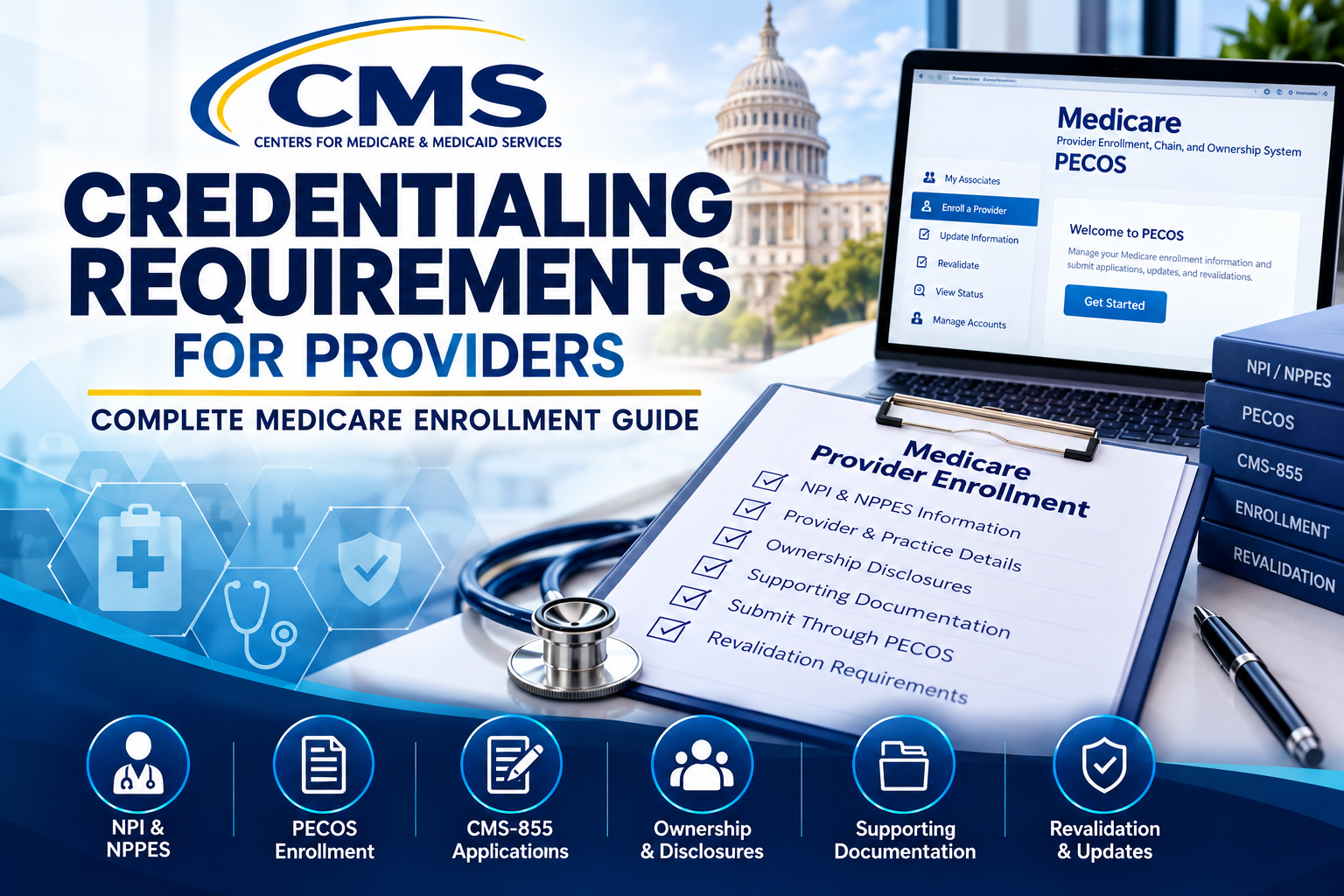
Credentialing and enrollment processes help insurance payers verify professional qualifications and establish appropriate billing relationships.
Depending on the payer and practice structure, these processes may involve:
A practice should verify each provider’s payer participation, effective dates, billing relationships, and relevant service locations before submitting claims.
When surgical practices hire additional physicians, expand to new locations, or establish new group relationships, enrollment requirements may become more complicated.
Delays can affect scheduling decisions, payer participation, and claim reimbursement.
Nexa Digital Pro provides Provider Credentialing and Enrollment Services to help surgical practices organize applications, monitor payer responses, and maintain more consistent enrollment records.
Today, a medical practice’s website is often one of the first places potential patients visit when researching healthcare providers.
For surgical practices, a professional website should communicate clinical expertise, explain available services, and make it easy for patients to contact the office.
An outdated, difficult-to-navigate, or poorly structured website can create unnecessary obstacles for prospective patients.
Professional Design
A modern design helps present your practice clearly and professionally.
Mobile-Friendly Experience
Patients should be able to access important information easily on smartphones, tablets, and desktop computers.
Dedicated Surgical Service Pages
Individual pages can explain procedures, conditions treated, consultation processes, and other relevant information.
Surgeon Profiles
Provider biographies can highlight qualifications, specialties, experience, and professional credentials.
Appointment Inquiry Options
Clear contact information and appropriate scheduling features can simplify patient communication.
Patient Education
Educational content helps patients better understand procedures, preparation, recovery, and questions to discuss with their surgeons.
Website Security and Privacy
Healthcare websites should use appropriate security measures. Any forms or systems collecting protected health information must be designed and operated in accordance with applicable privacy and security requirements.
At Nexa Digital Pro, our Medical Website Development Services help surgical practices establish a professional digital presence that supports patient communication and practice growth.
Having a website is important, but visibility in search engines is equally valuable.
When patients search for surgical specialists, they often begin with Google.
Searches may include phrases such as:
These searches represent opportunities for practices to connect with people seeking relevant medical services.
Healthcare Search Engine Optimization (SEO) focuses on improving a website’s relevance, accessibility, and visibility in organic search results.
Local SEO
Optimize your Google Business Profile and maintain accurate practice information across relevant online listings.
Specialty-Specific Service Pages
Create helpful pages for the procedures and conditions your surgical practice actually treats.
Location-Based Keywords
Use appropriate geographic keywords in titles, headings, website content, and metadata.
Educational Blog Content
Publish informative articles addressing common patient questions, surgical preparation, treatment considerations, and recovery topics.
Technical Website Optimization
Improve mobile usability, loading performance, internal linking, and website crawlability.
Professional Credibility
Provide accurate physician credentials, author information, and medically reviewed content where appropriate.
Because surgical topics involve health decisions, content should be medically accurate, patient-focused, and consistent with the practice’s actual services.
An effective SEO strategy can improve a practice’s opportunity to appear in relevant searches.
However, search rankings and patient acquisition cannot be guaranteed.
Results depend on factors such as competition, location, website quality, search intent, and the ongoing effectiveness of the strategy.
Nexa Digital Pro offers Healthcare SEO and Digital Marketing Services designed to help medical practices strengthen their online visibility and improve their ability to connect with prospective patients.
Many surgical practices work with separate vendors for billing, credentialing, website development, and digital marketing.
Although this arrangement can work, managing several service providers may create communication challenges and administrative complexity.
An integrated service model can offer a more coordinated approach.
At Nexa Digital Pro, we bring together essential revenue cycle and digital services under one roof.
| Service | How it supports surgical practices |
|---|---|
| Surgery Medical Billing | Supports coding review, claims preparation, submission, and payment workflows |
| Revenue Cycle Management | Helps coordinate billing processes from eligibility verification through collections |
| Denial Management | Investigates denied claims and supports appropriate corrections and appeals |
| Accounts Receivable Management | Monitors aging claims and supports payer follow-up |
| Provider Credentialing | Supports Medicare, Medicaid, and commercial payer enrollment |
| Prior Authorization Support | Helps coordinate authorization requests and payer follow-up |
| Medical Website Development | Builds professional, patient-friendly practice websites |
| Healthcare SEO | Improves opportunities for relevant organic and local search visibility |
| Digital Marketing | Supports online branding, patient education, and practice outreach |
Our objective is to help surgical practices improve administrative efficiency while supporting sustainable business growth.
Different surgical specialties have different billing and operational requirements.
Specialized billing, credentialing, and digital marketing support may benefit practices in areas such as:
Each specialty may have unique procedure codes, payer policies, documentation requirements, and reimbursement challenges.
The appropriate billing and marketing strategy should reflect the practice’s actual services, payer mix, staffing, and business objectives.
Before outsourcing surgical billing or digital operations, practices should carefully evaluate potential service providers.
Important considerations include:
Specialty Experience: Does the company understand surgical coding, payer requirements, and revenue cycle workflows?
Reporting and Transparency: Can the company provide meaningful information about claim performance, denials, aging A/R, and collections?
Credentialing Support: Can it assist with payer enrollment, application follow-up, and demographic maintenance?
Communication: Will your practice have clear points of contact and timely updates?
Technology and Security: Does the company maintain appropriate safeguards for sensitive healthcare information?
Digital Capabilities: Can it support website development, search visibility, and ongoing marketing needs?
Service Accountability: Are responsibilities, deliverables, pricing, and performance expectations clearly documented?
For U.S. healthcare providers, any vendor handling protected health information should also be evaluated for applicable HIPAA responsibilities, including business associate agreements where required.
Choosing the right partner involves more than comparing service fees. Practices should consider operational reliability, communication quality, data security, and the provider’s ability to meet their specific needs.
At Nexa Digital Pro, we understand that surgical practices need dependable administrative support and a professional digital presence.
Our approach combines revenue cycle operations with technology and marketing services to support healthcare providers across the United States.
We offer:
By coordinating these services, we aim to help your practice reduce unnecessary administrative complexity, improve workflow visibility, and focus more attention on patient care.
Your Practice. Our Digital Support.
Surgery medical billing services involve preparing, reviewing, submitting, and following up on insurance claims for surgical procedures. They may include surgical coding, modifier review, payment posting, denial management, and accounts receivable follow-up.
Surgical billing may involve multiple procedure codes, global surgical periods, procedure-specific modifiers, detailed operative documentation, prior authorization, and varying payer reimbursement policies.
RCM helps coordinate administrative and financial workflows, including eligibility verification, authorization, coding, claims processing, payment posting, denials, and A/R management. Strong processes can help reduce avoidable errors and improve payment follow-up.
Surgeons who wish to bill particular insurance plans generally need to satisfy applicable enrollment, participation, and billing requirements. These vary by payer, practice structure, and provider relationship.
Common causes include coding discrepancies, missing modifiers, incomplete documentation, coverage limitations, authorization issues, eligibility problems, and payer enrollment errors.
A well-designed website can improve access to practice information, strengthen credibility, and support patient inquiries. Results depend on the website’s quality, usability, content, and marketing strategy.
SEO for surgeons involves optimizing a surgical practice’s website and local online presence so that relevant patients can more easily discover its services through organic search.
Yes. Some healthcare service providers offer integrated support covering medical billing, revenue cycle management, credentialing, website development, and digital marketing. Practices should evaluate each service’s scope, expertise, security, and contractual terms.
Author: Michael Clarke