 Skip to content

How Do Therapists Get Paid by Insurance in the USA?

For therapists, counselors, psychologists, and behavioral health practices, accepting insurance can make mental health services accessible to more patients—but getting paid by insurance involves much more than simply conducting a therapy session and sending an invoice. To receive reimbursement consistently, a therapist generally needs the appropriate professional license, payer enrollment or credentialing where required, accurate […]
How to See Patients When the Physician Isn’t Credentialed Yet

Hiring a new physician can be exciting for a medical practice—but what happens when the physician is ready to start seeing patients before payer credentialing is complete? This is one of the most common challenges in provider credentialing and medical billing. A physician may already have an active license, NPI, malpractice coverage, and employment agreement, […]
CMS Credentialing Requirements for Providers

Healthcare providers who want to participate in Medicare must complete the appropriate CMS provider enrollment requirements before they can maintain Medicare billing privileges. For physicians, non-physician practitioners, group practices, clinics, institutional providers, and certain other healthcare organizations, enrollment can involve an NPI, PECOS application, professional and business information, ownership disclosures, supporting documentation, Medicare Administrative Contractor […]
What Are the Medical Record Retention Requirements in Texas?

Healthcare providers generate and maintain an enormous amount of patient information—from clinical notes and diagnostic results to treatment histories, billing documentation, insurance information, authorizations, and electronic health records. But how long should medical records be kept in Texas? For Texas physicians, the general rule is straightforward: medical records must generally be retained for at least […]
How Effective A/R Management Can Strengthen Your Revenue Cycle

For healthcare practices, providing excellent patient care is only one part of maintaining a successful operation. After services are provided and claims are submitted, practices must ensure that outstanding balances are properly tracked and followed through the revenue cycle. Accounts Receivable (A/R) in medical billing represents money that remains outstanding for healthcare services already provided. […]
What Are the Medical Record Retention Requirements in Texas?

Managing patient records is an essential part of operating a compliant healthcare practice. Physicians, medical groups, clinics, and healthcare organizations must understand medical record retention requirements in Texas to ensure patient information remains available for the required period while also protecting the privacy and security of protected health information (PHI). For Texas physicians, the general […]
ICD-10 Coding Errors: How Small Mistakes Can Create Big Revenue Cycle Problems
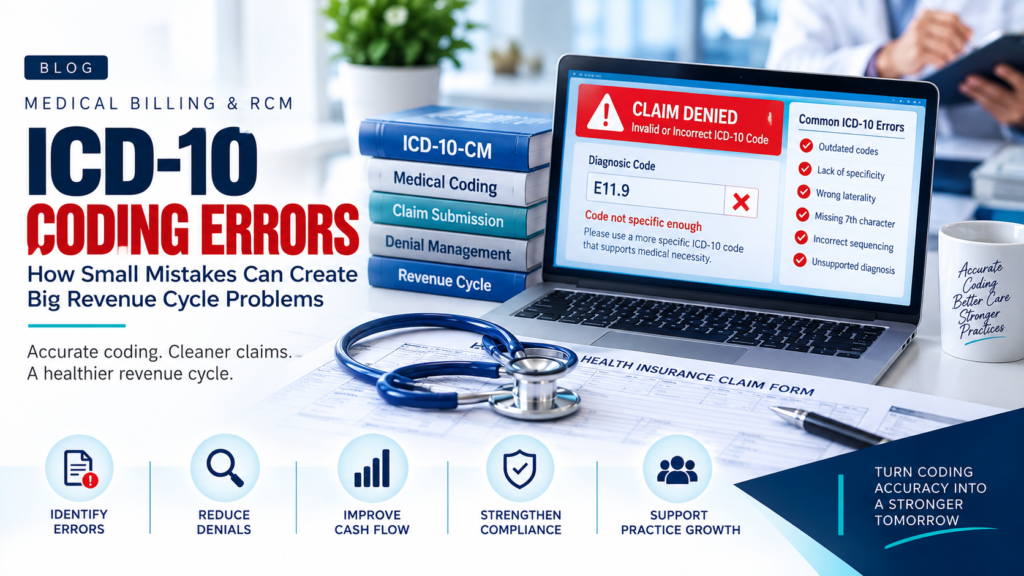
Medical billing is not simply about submitting claims. A claim must accurately communicate why a patient received a service, what condition was evaluated or treated, and how that service is supported by the medical record. That is where ICD-10-CM diagnosis coding becomes critical. An incorrect, outdated, incomplete, or unsupported ICD-10 code can contribute to claim […]
Choosing the Right EHR Can Shape the Future of Your Practice

Choosing an Electronic Health Record (EHR) system is one of the most important technology decisions a medical practice can make. The right EHR can help physicians document care efficiently, organize patient information, coordinate workflows, connect clinical and administrative processes, and support billing operations. The wrong system can create the opposite experience: extra clicks, frustrated staff, […]
Urology Billing Services: Improve Reimbursement, Reduce Denials & Strengthen Your Revenue Cycle

Running a successful urology practice requires much more than delivering excellent patient care. Behind every office visit, diagnostic test, procedure, surgery, medication, and follow-up appointment is a complex billing process that determines whether the practice gets paid accurately and on time. That is why specialized urology billing services can play an important role in the […]
RPM Reimbursement in 2026 CPT Codes, Medicare Billing Rules & New Updates
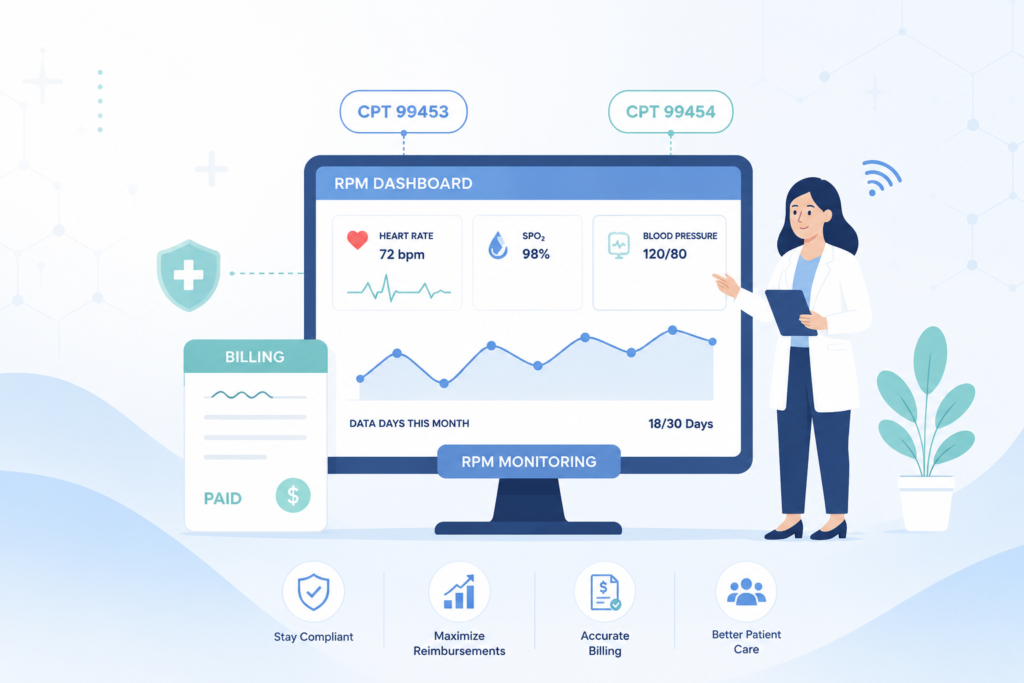
CPT Codes, Medicare B In 2026, RPM reimbursement brings important billing opportunities, including new CPT codes designed to cover patients who may not meet the traditional device-day or treatment-management thresholds. For physicians, medical groups, billing teams, and healthcare organizations, understanding the latest RPM CPT codes, Medicare billing requirements, documentation rules, and reimbursement guidelines is essential […]